Book Appointment Now


What is the relationship between vitamins and hair loss?
What is the relationship between vitamins and hair loss?
Some organisations offer paid subscription options to increase access to comprehensive information about vitamins and hair loss. That highlights the need for reliable sources on vitamins and hair loss. Hair loss is common and is sometimes accompanied by fatigue and uncertainty about the cause. The role that specific vitamins, such as B12, D or iron, play in hair growth, and how deficiencies in them can contribute to hair loss, is not known. Understanding how these nutrients influence the hair growth cycle helps in making informed choices about vitality and health.
Table of contents
What is the link between vitamins and hair loss in women?
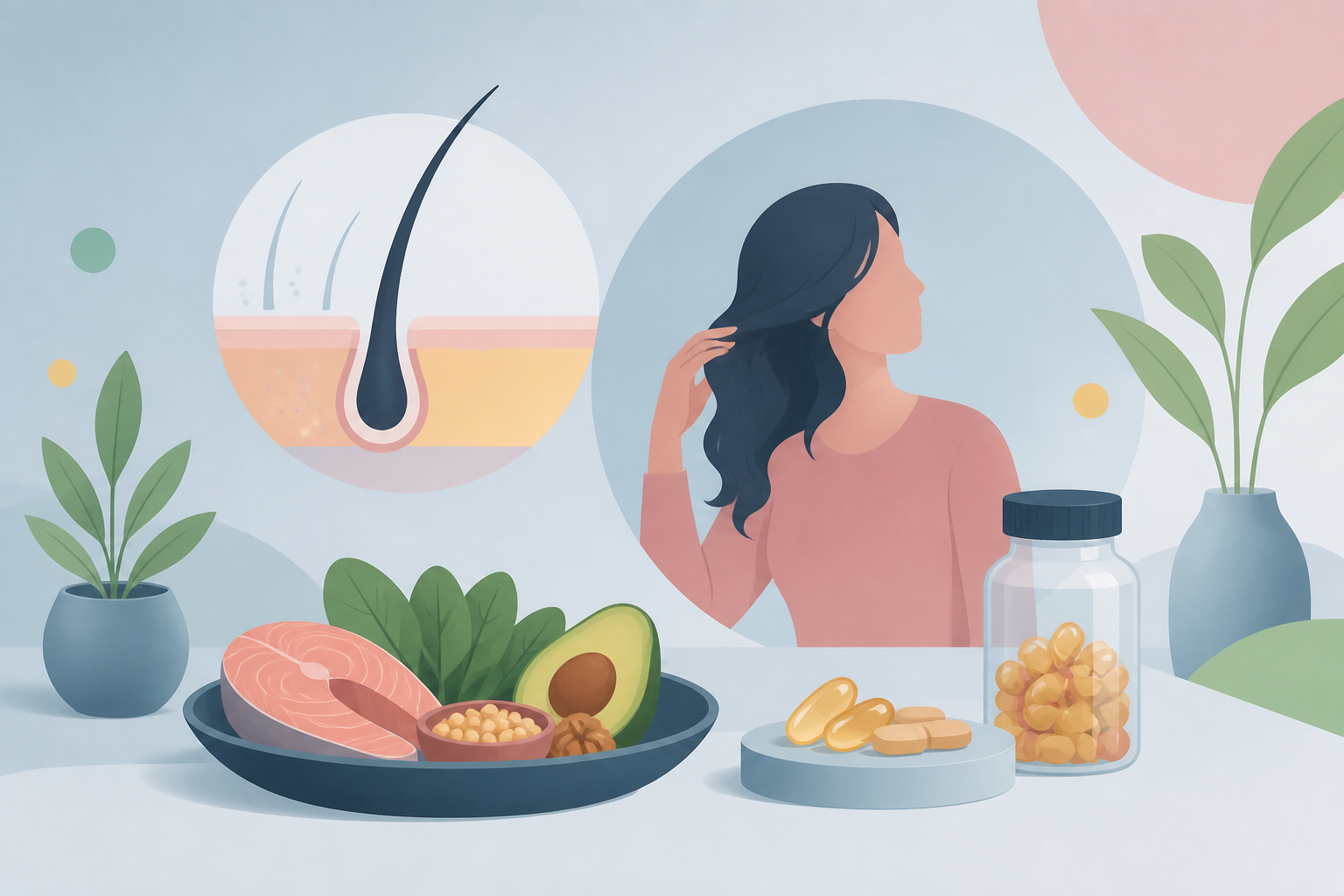
Vitamin and mineral deficiencies can, alongside other factors, contribute to hair loss. Certain vitamins and minerals are essential for the healthy functioning of hair follicles and the hair growth cycle. A deficiency can disrupt this natural growth and thereby promote hair loss. During periods of hormonal change, such as the menopause, sensitivity to such deficiencies can increase, which may intensify the effect on hair density. Hair loss is often a complex problem with multiple underlying causes, including genetic predisposition, hormonal fluctuations and dietary habits.
Micronutrients and hair cycle disruption
Relevant micronutrients include various B vitamins, iron, zinc and vitamin D, all of which support the hair cycle. An iron deficiency, for example, can lead to telogen effluvium, in which an above-average number of hairs enter the resting phase and fall out. Vitamin D is important for the differentiation of keratinocytes in the hair follicles and thus plays a role in hair growth. Correcting identified deficiencies can have a positive influence on the recovery of the hair cycle and the reduction of hair loss.
How does a vitamin B12 deficiency affect your hair growth?
A vitamin B12 deficiency can indirectly contribute to hair growth problems and the condition of the hair. Vitamin B12 is important for the production of red blood cells, which transport oxygen and nutrients to hair follicles. If vitamin B12 is insufficient, this oxygen supply can be reduced, which can affect the function of hair follicles. This can lead to thinning hair or increased hair loss, with potential consequences for vitality and self-image. Consider medical evaluation for unexplained changes in the hair.
Causes of vitamin B12 deficiency in women
Around the menopause, several factors can contribute to vitamin B12 deficiencies. Hormonal changes during the (peri)menopause can affect the absorption of nutrients. Certain medications, gastrointestinal issues such as Crohn's disease, or a vegetarian or vegan diet without adequate supplementation are also common causes. It is important to identify these underlying reasons to determine an effective approach. Identifying the causes helps you determine diagnostics and treatment options, such as blood tests and nutritional advice.
Why is vitamin D crucial for healthy hair follicles?
Vitamin D influences cell growth and cell differentiation in hair follicles, processes that affect the hair growth cycle. Hair follicles have vitamin D receptors, indicating that vitamin D can directly affect cells there. Adequate vitamin D can support the transition from the resting phase to the growth phase. This means that a deficiency can affect normal hair growth and potentially contribute to hair loss, whereby the hair follicles become less active, causing the hair to thin or fall out. Vitamin D is one of several factors that can influence hair quality.
Vitamin D deficiency and wider health
A deficiency has potential consequences for hormonal and metabolic functions, alongside effects on hair follicles. Vitamin D acts in a hormone-like manner and plays a role in, amongst other things, the immune system and bone health. In the event of insufficient vitamin D, these systems can become disrupted, which can manifest in various ways, potentially including hair health issues. Addressing a vitamin D deficiency can therefore not only be beneficial for your hair, but also for your overall well-being.
What role does iron play in building your hair structure?
Iron supports hair structure and plays a role in preventing hair loss. This mineral is necessary for the production of haemoglobin, a protein in red blood cells that transports oxygen to the cells in your body, including the hair follicles. Sufficient oxygen supply to the hair follicles is fundamental for hair growth and maintaining strong, healthy locks. If iron is insufficient, the hair growth cycle can be affected, which can weaken the hair. Therefore, it is important to monitor iron intake, especially with increasing hair thinning.
Chronic shortages, stress and hair quality
Long-term nutrient deficiencies, including iron, are associated with reduced hair growth. When your body does not get enough iron over an extended period, this can lead to iron-deficiency anaemia, which is a potential factor in hair loss in women, particularly around hormonal changes. Stress can affect hair growth by pushing hairs into a resting phase, which increases shedding. A balanced diet and attention to stress reduction support the maintenance of hair quality and can reduce hair loss.
How do you recognise a vitamin deficiency and hair loss during the menopause?
Hair loss during the menopause can have various causes, including hormonal fluctuations. A vitamin deficiency can exacerbate this process or contribute to it. This is often recognised by a diffuse, thinning head of hair, not just in specific spots, but across the entire scalp. Sometimes the hair texture also feels finer or more fragile than before. In addition, general symptoms such as fatigue, paleness, brittle nails or a reduced immune system can point to an underlying deficiency of essential nutrients. It is important to take these signs seriously, as a vitamin imbalance and hair loss often go hand in hand, especially during this phase of life.
Iron deficiency in women and vitamin synergy
A specific point of attention for women going through the menopause is iron deficiency, which can be a significant factor in hair loss. Iron is essential for the formation of haemoglobin, which transports oxygen to the hair follicles. When iron levels are low, the hair follicles receive insufficient oxygen, which inhibits hair growth and leads to increased hair loss. The synergy with other vitamins is crucial in this regard; for example, vitamin C is necessary for the absorption of iron, and B vitamins support overall cell growth. Identifying these deficiencies is an important step towards recovery.
What is the effect of biotin on the quality of your hair?
Biotin, also known as vitamin B8, is an essential nutrient that plays a key role in the metabolism of fats, carbohydrates and proteins, including keratin. Keratin is the main building block of your hair. An adequate level of biotin is therefore important for the structure and strength of the hair, which contributes to overall quality and the prevention of brittleness. More background can be found at Vitamin.
Biotin and its impact on hair quality
The influence of biotin on hair quality extends to cell growth and cell division in the hair follicles. These processes are important for a healthy hair growth cycle. In the event of a biotin deficiency, the production of keratin can be affected, which can lead to weaker hair that breaks or falls out more easily. Although biotin is often praised as a remedy against hair loss, it is important to understand that supplementation is primarily effective in the case of an established deficiency. Without such a deficiency, the influence on hair quality may be more limited.
How do vitamins and hair loss reinforce each other during stress?
Stress, both acute and chronic, has a significant impact on bodily functions, including hair growth. It can make the relationship between vitamins and hair loss more complex. When the body is under stress, it produces more cortisol, a hormone that can affect the hair growth cycle and push hair follicles into a resting phase, which can lead to increased hair shedding. Furthermore, this stress response increases the demand for certain nutrients, such as B vitamins and magnesium, which are necessary for stress management and the maintenance of healthy hair growth. If the available vitamins and minerals are insufficient to support both the stress response and normal bodily functions, this can create a vicious circle of deficiencies and worsened hair loss.
Effect of stress on nutrient absorption
This in turn can exacerbate hair loss. For example, stress can reduce the efficiency with which the body absorbs nutrients and increase the excretion of certain vitamins, leading to a more rapid depletion of reserves. The hair follicles, which require a lot of energy and nutrients for their rapid cell renewal, are particularly sensitive to such deficiencies. Understanding this interplay is important for developing effective strategies to manage both stress and hair loss, and to provide the body with the right support.
Which hormonal factors disrupt the absorption of vitamins?
Hormonal fluctuations, such as those occurring during the menopause or in conditions like PCOS, can influence the way the body absorbs and utilises essential nutrients. These changes affect metabolism and cell division, which has direct consequences for the availability of vitamins that are crucial for many bodily functions, including hair growth. A disrupted hormonal balance can impair gut health, which reduces the absorption of various vitamins. This phenomenon can contribute to the issue of hair loss due to vitamin deficiencies, whereby even with an adequate intake of nutrients, the body is unable to use them effectively.
Thyroid hormones and vitamin metabolism
Thyroid hormones play a key role in overall metabolism, including the processing of vitamins. Both an overactive and an underactive thyroid can disrupt the absorption and utilisation of important vitamins and minerals. For example, a thyroid hormone imbalance can affect the conversion of beta-carotene into vitamin A, or reduce the absorption of iron and zinc, both of which are necessary for healthy hair growth. These disturbances can subsequently have a direct impact on the condition of the hair and further complicate the cycle of vitamin deficiencies and hair loss. It is therefore important to consider thyroid function in cases of persistent hair loss.
How long does hair recovery take after a deficiency in 2026?
The recovery of hair following a deficiency of certain vitamins, such as with vitamin-related hair loss, is a process that requires patience and is influenced by various factors. Underlying deficiencies must first be replenished, which typically can take several months. Only after that can the body begin to optimise hair growth. A blood test can provide clarity on your nutrient status, such as your iron stores or vitamin D levels, which is crucial for a targeted approach.
Consistency and holistic approach
The duration of the recovery depends on the severity of the initial deficiency and your overall health. A consistent approach, following recommended supplementation and paying attention to a balanced diet, supports the recovery process. In addition, it is important to manage stress and get enough sleep, as these factors contribute to the regeneration of cells and tissues, including those of the hair. IKARIA Clinics emphasises that a holistic approach, which looks beyond mere supplements, is the most effective path to sustainable recovery and the prevention of future hair problems.
When is medical investigation for hair loss necessary?
Medical research into hair loss is necessary when you notice that hair shedding persists, worsens or is accompanied by other unexplained symptoms. Especially if you notice that the hair loss is diffuse, meaning spread across the entire scalp and not specific to one spot, it is advisable to consult an expert. This is certainly true if you suspect that the cause lies deeper than just cosmetic factors, such as with hormonal changes or if you have been suffering from fatigue or other physical complaints for a long time. A timely diagnosis helps to determine whether there is an underlying health problem affecting vitamins and hair loss.
Relevant blood tests for hair loss
To determine the cause of hair loss, there are specific blood values that can provide insight into potential deficiencies or imbalances. Important values to check include ferritin (iron storage), vitamin D levels, and thyroid hormones. A complete blood count can also provide clues about your overall health and potential inflammatory processes. These analyses are crucial to determine whether a deficiency in a particular vitamin is causing the hair loss, and to be able to advise a targeted approach. IKARIA Clinics is happy to help you gain insight into the relevant blood values and their interpretation.
Conclusion vitamin and hair loss
The relationship between vitamins and hair loss in women is complex, but clear: deficiencies in essential nutrients such as vitamin B12, D, iron and biotin can significantly disrupt the hair growth cycle. These vitamins are crucial for the health of your hair follicles and oxygen supply, especially during hormonal changes. You now have insight into how these deficiencies can cause hair loss and why a synergistic approach is important. To determine the specific cause of your hair loss and to establish a targeted strategy, further investigation is essential. IKARIA Clinics is happy to help you gain insight into your unique situation through reliable analyses, allowing you to make well-informed choices for your vitality and hair health.